Research
Effect of hydrostatic pressure on the electronic and superconducting properties of bismuthate superconductor: An ab initio study
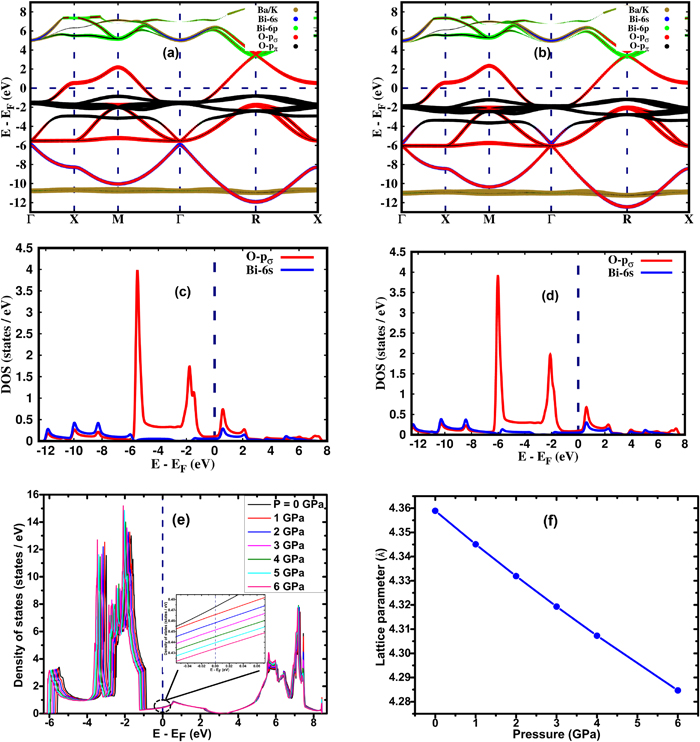
The present study investigates the influence of hydrostatic pressure on the electronic structure and the electron–phonon coupling in Ba0.6K0.4BiO3 (BKBO) cubic superconductor using first-principles calculations. The increase in applied pressure increases the degree of orbital hybridization between Bi-s and O-p\sigma states. Also, suppression of oxygen hole is observed with increasing applied pressure, and Bi-s states play a more crucial role in the metallicity of the material. The study of lattice dynamics reveals that the cubic BKBO compound is dynamically stable up to an applied pressure of 7 GPa. The primary contribution to the overall electron–phonon coupling comes from the phonons associated with the oxygen bond stretching vibrations. With the increase in the hydrostatic pressure applied on the system, the phonon frequencies corresponding to oxygen bond stretching vibrations increase, leading to a decrease in electron–phonon coupling strength and, hence, the reduction in the superconducting Tc. The suppression of Tc can be attributed to the suppression of electronic density of states at the Fermi level. The superconducting parameters calculated using density functional theory within the generalized gradient approximation are underestimated compared to the experimental values. The implementation of the HSE06 hybrid functional enhances the electron–phonon coupling in the compound by incorporating the long-range Coulomb interaction in the system. It makes \lambda and Tc close to the experiments while maintaining the similar behavior of these superconducting properties under pressure as in the GGA calculations. These results highlight the exact role of nonlocal electronic correlation in the superconductivity in bismuthate.
Read More
R-matrix calculations of photoionization cross-sections of sulfur-containing compounds
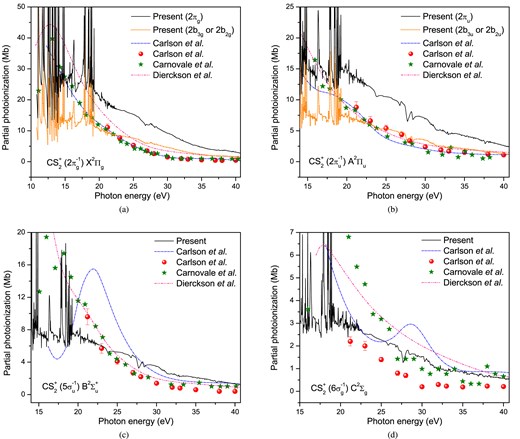
In this work, the R-matrix method was employed to calculate the total and partial-channel photoionization cross-sections for the initial three bands of hydrogen sulfide, four bands of carbon disulfide, and three bands of carbonyl sulfide molecules. These calculations were performed over the entire range of photon energy, starting from the ionization thresholds of the respective states and extending significantly beyond the final level thresholds of the target ions. The present computations incorporate electron correlation effects and resonant photoionization contributions that have not been considered in any previously published literature. Intense absorption is observed in the total photoionization cross-section at energies below 20 eV, with a significant portion of it being caused by the excitation of molecules that subsequently decay by strong autoionization. The current R-matrix results are mostly in line with previous experimental measurements and theoretical calculations. The computed data are crucial for modeling parameters observed in photoionized plasmas.
Read More
Evidence of Relativistic Field-Derivative Torque in Nonlinear THz Response of Magnetization Dynamics
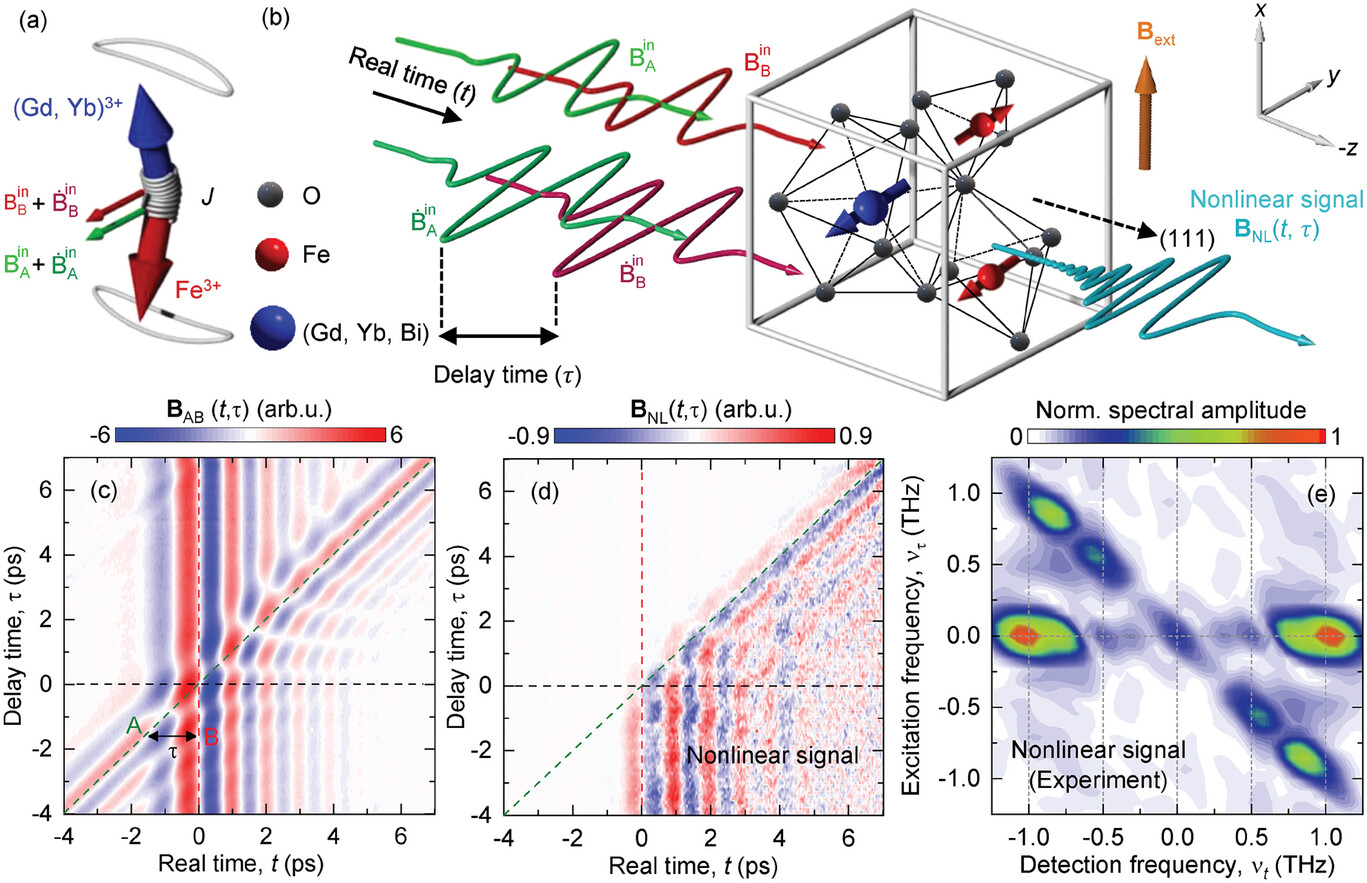
Understanding the complete light-spin interactions in magnetic systems is the key to manipulating the magnetization using optical means at ultrafast timescales. The selective addressing of spins by THz electromagnetic fields via Zeeman torque is one of the most successful ultrafast means of controlling magnetic excitations. Here it is showed that this traditional Zeeman torque on the spins is not sufficient, rather an additional relativistic field-derivative torque is essential to realize the observed magnetization dynamics. This is accomplished by exploring the ultrafast nonlinear magnetization dynamics of rare-earth, Bi-doped iron garnet when excited by two co-propagating THz pulses. First, by exciting the sample with an intense THz pulse and probing the magnetization dynamics using magneto-optical Faraday effect, the collective exchange resonance mode is found between rare-earth and transition metal sublattices at 0.48 THz. Further, the magnetization dynamics are explored via the THz time-domain spectroscopic means. It is found that the observed nonlinear trace of the magnetic response cannot be mapped to the magnetization precession induced by the Zeeman torque, while the Zeeman torque supplemented by an additional field-derivative torque follows the experimental evidences. This breakthrough enhances the comprehension of ultra-relativistic effects and paves the way toward novel technologies harnessing light-induced control over magnetic systems.
Read More
Enhancement of room temperature sensitivity and reduction of baseline drift in WO3/g-C3N4 nanocomposite based volatile organic compound gas sensors
Baseline drift is a common problem associated with metal oxide semiconductor based gas sensors operating at room temperature. There have been theoretical approaches to eliminate the errors involved in the response and sensitivity calculations due to baseline drift of gas sensors. However, no such experimental strategy such as using novel oxide semiconductors and their composites with stable electrical resistance, has so far been developed. We have observed that room temperature volatile organic compound gas sensing properties of tungsten tri-oxide (WO3) nanocrystals can be significantly enhanced by compositing them with graphitic carbon nitride (g-C3N4). Improved performances characterized by increased responses and reduced baseline drifts have been observed for WO3/g-C3N4 nanocomposite based gas sensors. Tungsten tri-oxide (WO3) nanocrystals were synthesized by hydrothermal method. Similarly, graphitic carbon nitride (g-C3N4) was synthesized by thermal poly-condensation of melamine. WO3/g-C3N4 nanocomposite was obtained by grinding above powders in an agate mortar and pestle followed by sintering at 450 °C for 2 h. Volatile organic compound gas sensing properties of WO3/g-C3N4 nanocomposite based sensors were studied at room temperature. WO3/g-C3N4 nanocomposite showed better stability and higher response compared to pristine WO3. Very small baseline drift was observed with WO3/g-C3N4 nanocomposite based sensors during volatile organic compound (VOC) gas sensing. Response of WO3/g-C3N4 nanocomposite towards 636 ppm ethanol gas, for example, was more than 20 % higher than that of WO3. The response and baseline resistance drift were measured for WO3/g-C3N4 pellets having varying weight percentages of WO3 and g-C3N4. With an increase in g-C3N4 content, baseline drift and response decline due to an increase in sensor material resistance. Selectivity of the sensor was examined by using three target gases: acetone, ethanol and formaldehyde. 50%WO3/50%g-C3N4 (w/w) nanocomposite showed 91 % response to 1272 ppm ethanol gas whereas the limit of detection for ethanol gas was 106 ppm. Innovation points of this work includes enhanced sensitivity, very small baseline drift and stable room temperature operation of WO3/g-C3N4 nanocomposite based ethanol gas sensors. Enhanced ethanol sensing properties of WO3/g-C3N4 nanocomposite at room temperature invite its possible application in commercial volatile organic compound gas sensors in future.
Read More
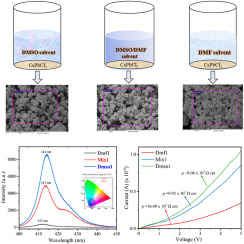
Optimizing the properties of CsPbCl₃ perovskites using a solvent-based synthesis approach
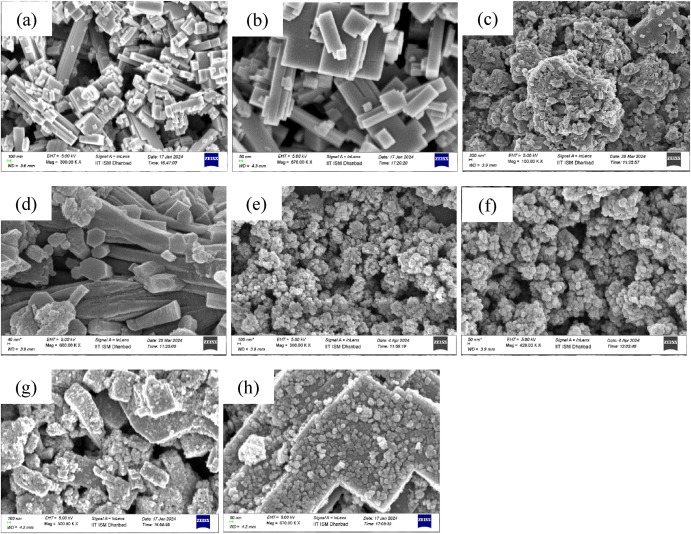
All-inorganic halide perovskites CsPbX3 (X = Cl, Br, I) have shown encouraging potential for optoelectronic devices. In this work, the synthesis of CsPbCl3 perovskites is reported by a simple approach using three different solvents namely dimethylformamide (DMF), dimethyl sulfoxide (DMSO) and a mixture of dimethyl sulfoxide and dimethylformamide. The structural, optical and electrical properties of CsPbCl3 perovskites are compared to identify the optimal solvent for the synthesis process. The DMSO-based CsPbCl3 perovskite exhibits an optical bandgap value of 2.96 eV along with high photoluminescence intensity, high charge carrier mobility (29.8 cm2/V-s), and low resistivity (8.06 x 10⁷ Ω-cm) compared to the other two CsPbCl3 perovskites. These results indicate that DMSO solvent plays an important role in achieving desired optical and electrical properties of CsPbCl3 perovskites suitable for optoelectronic devices.
Read More
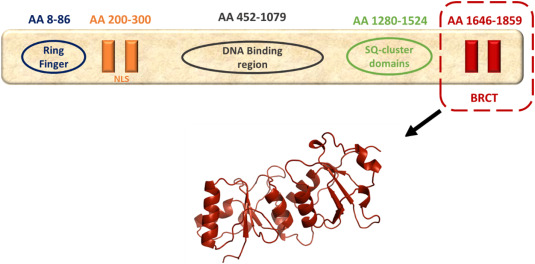
In silico screening and identifying phytoconstituents of Withania somnifera as potent inhibitors of BRCA1 mutants: A therapeutic against breast cancer
Breast CAncer gene 1 (BRCA1) is an anti-oncogene that helps the cell repair damaged DNA and preserve genetic material. BRCA1 also acts as a cell growth suppressor and produces tumor suppressor gene (TSG) proteins, i.e., BRCA1 protein. Remarkably, BRCA1 mutations account for 90% of hereditary breast cancer and a majority of hereditary ovarian cancer. Hence, we have considered three mutants of BRCA1 (R1699W, R1699Q, T1700A) in this study and adopted an in-silico approach to find the best possible phytochemical to inhibit these mutated proteins, enabling early breast cancer diagnosis. Perceiving the importance, many natural molecules from ancient medicinal plants are considered for molecular docking. Our findings suggest that though many molecules bind actively with the receptor's active site, the top three phytoconstituents (27-Deoxy-14-hydroxywithaferin A, Withacoagulin, Somniferanolide) of Withania somnifera, commonly known as Ashwagandha, have high binding affinities and suitable pharmacokinetic properties, making these natural compounds potential drug candidates. Further, molecular dynamics (MD) simulation and the binding free energy calculation show stability and thermodynamically favourable. We can, therefore, draw the conclusion that these lead compounds act as potential inhibitors against BRCA1. However, wet lab experiments and clinical trials are recommended to ascertain its efficacy, hence the development of novel BRCA1 inhibitors.
Read More